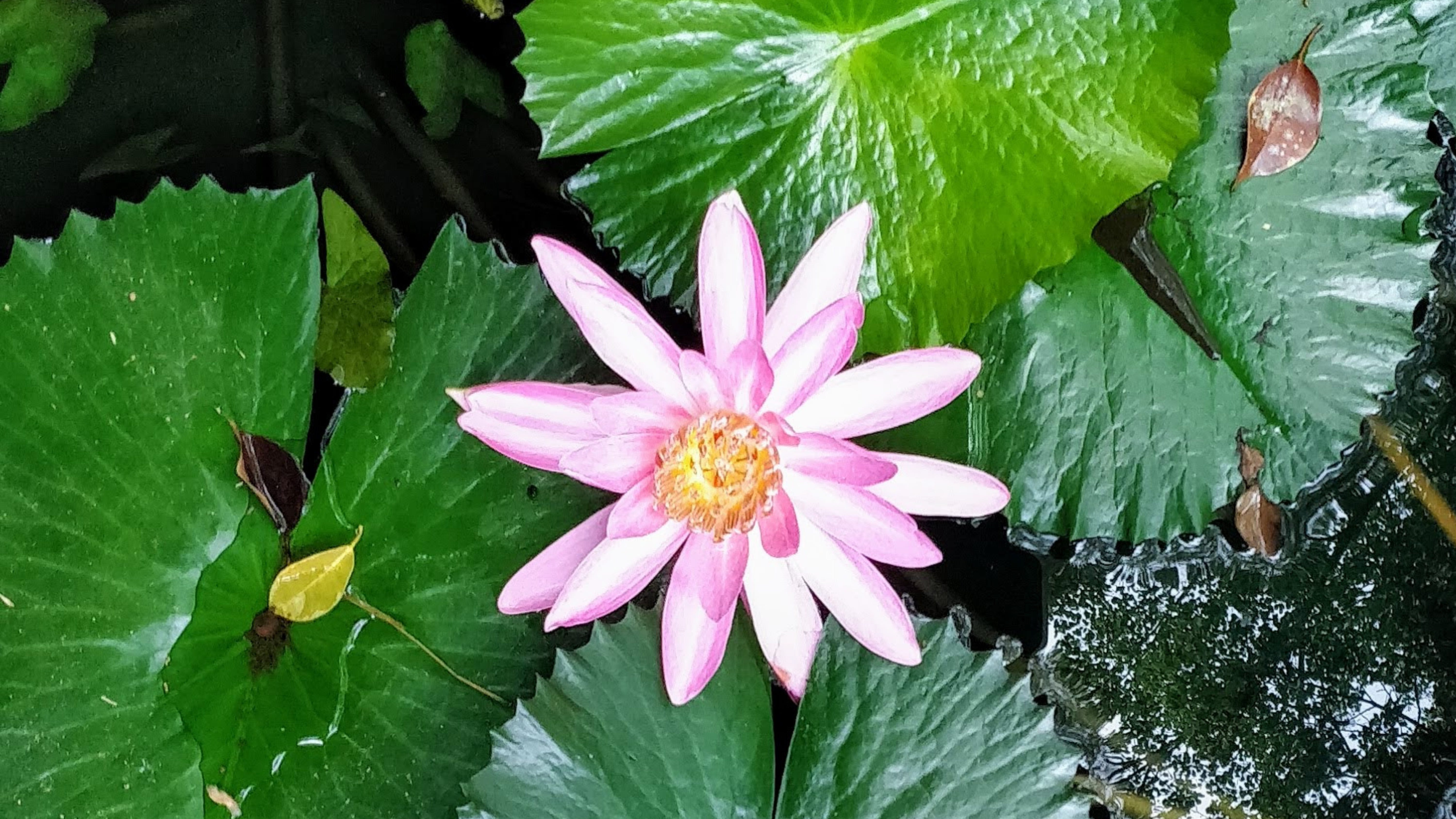
Look at this water lily I once found in a pond.
- Focusing briefly on images like this one is shown to heighten short-term concentration. I’m not going to proclaim myself a self-improvement shaman; I am, however, incentivised to have you be zoned in on this essay.
Here’s the most effective technique I have learnt to go from scrolling through garbage on my laptop / smartphone to completing a draft essay / doc / presentation without bricking my phone. (I still recommend everyone brick theirs phones for a month.)
Block out all external noise / sound. Turn on Do Not Disturb mode on your phone.
- Play non-lyrical music. If it’s music you actually like as opposed to an arbitrary hip-hop beats channels off of YouTube, Spotify or the like, that’s a lot more effective.
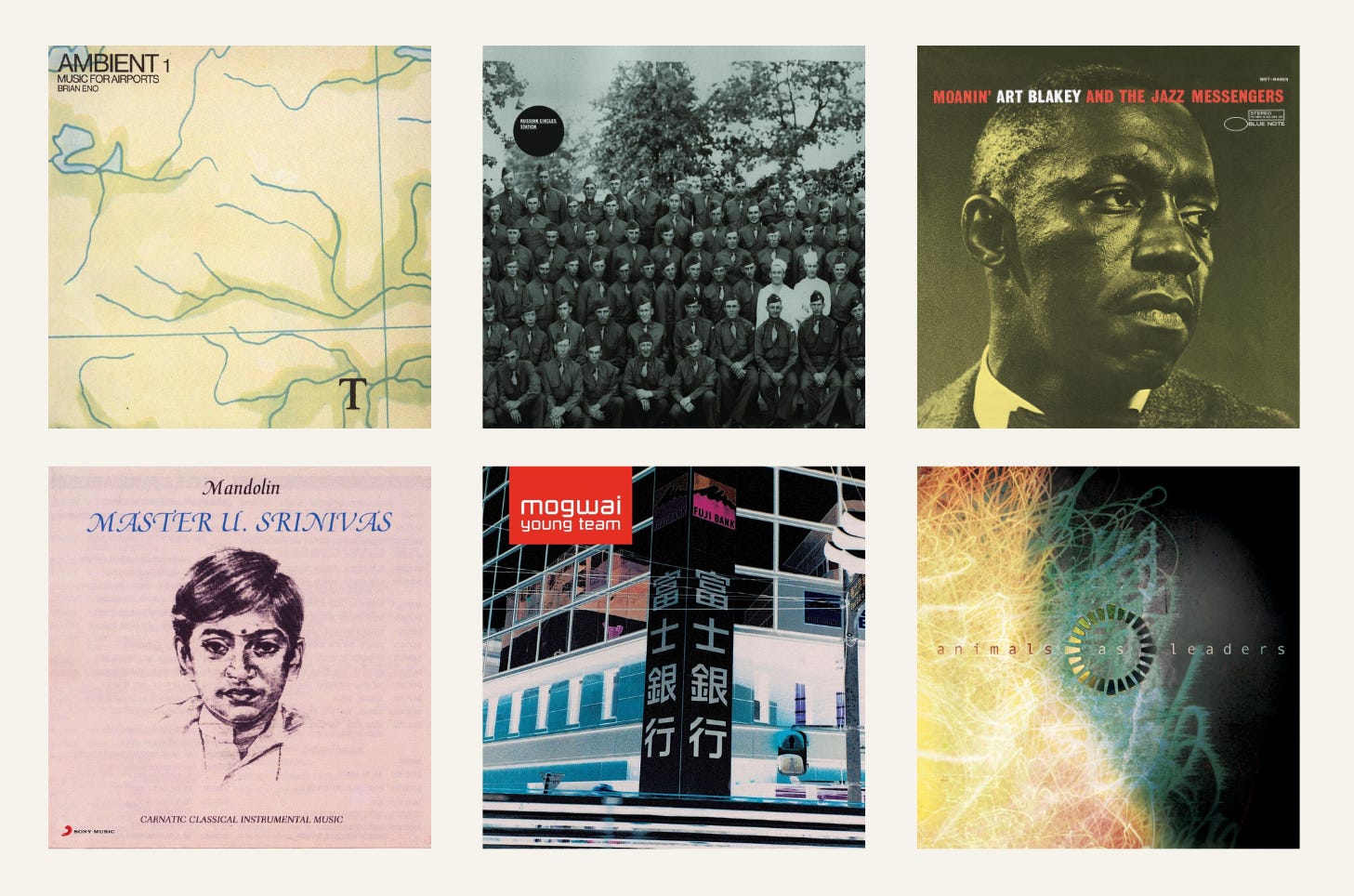
If your head’s feeling noisy and you need to replace the noise in it with something more inert, try Brian Eno’s Music for Airports.
If your head’s feeling anxious, nervous, uneasy, uncertain, needs something to match its intensity to stop it in its tracks, try Russian Circles’ Youngblood, Mogwai’s Young Team.
If your head’s dull, a doozy, needs picking up, try the hard bop stylings of Art Blakey and the Jazz Messengers on Moanin’.
If you’re feeling emotional, wistful maybe, your mind’s wandering to some far away daydream, try *Mandolin *by U Srinivas.
If what your experiencing is a version of determination, a can-do attitude with a side of you-can-do-it, then maybe consider Animals as Leaders’ self-titled.
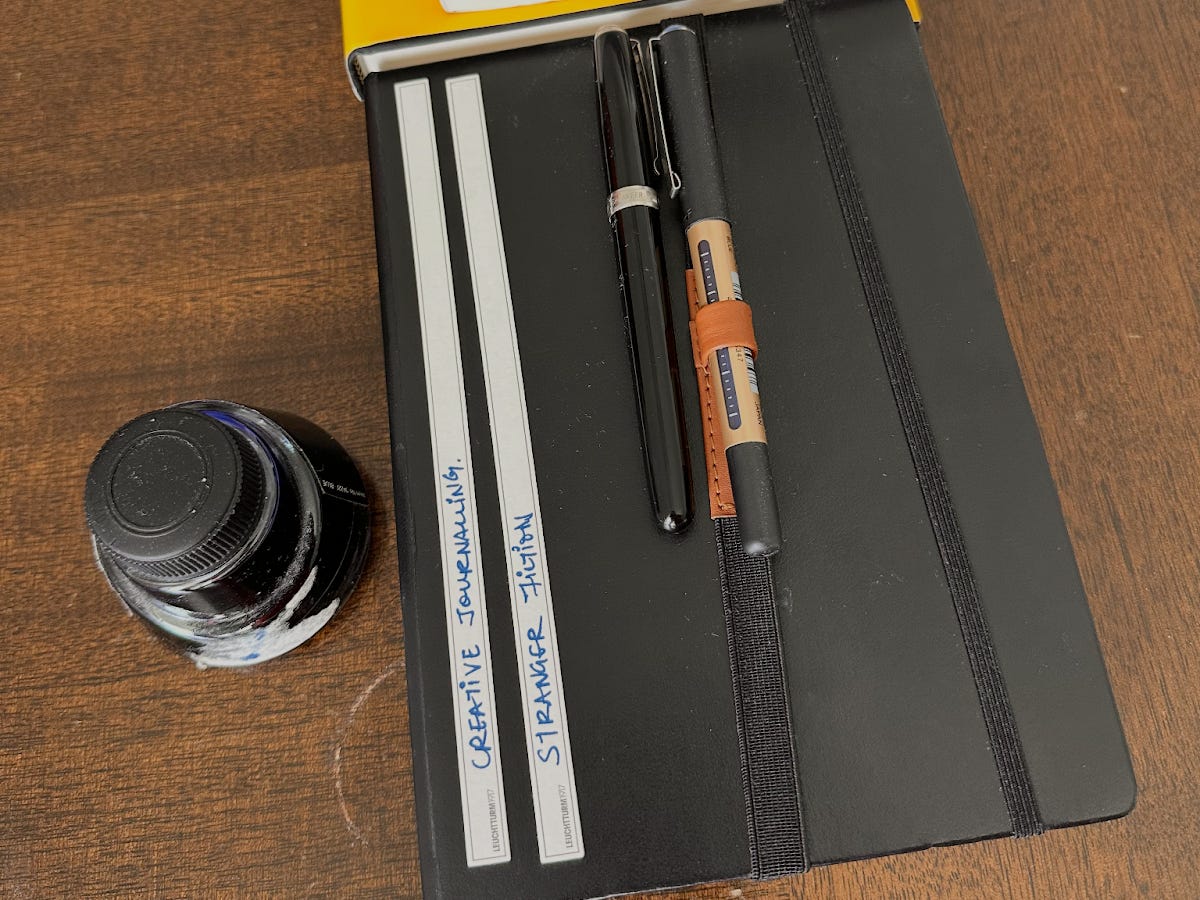
- Start your writing on paper or on something that is close to paper. I for one love notebooks. Anything worth committing to a document or (shudder) a slide deck goes through the following journey –
(1) collect your ideas in a brain dump, synthesise a hypothesis, summarise it → (2) build out from the summary to a draft → (3) revise said draft → (4) collect feedback on this draft (if you need to pass it by a boss, a client, an editor, etc.) and revise → (5) repeat until either the feedback giver (if you have a manager, an investor, a publisher, etc.) or receiver gives up → (6) close the document.
What you’re doing here is step 1 of the process. Put a bracket around every idea about which you’re unsure, every concept you believe needs more research – no googling, no ChatGPT. There’s numerous benefits to this, I have found. Here’s three.
You don’t get notifications on your notebook.
Your notebook isn’t colourful and doesn’t have Instagram on it.
If you’re an age similar to mine (I’m thirty-four), your formative years of education happened through sliding implements resembling the pen you hold today over surfaces resembling the paper of today’s notebook. I’ve heard several claims about writing – particularly of the tree-subtractive pen-and-paper variety – being far more beneficial for focus and the retention of knowledge than any other form of note-taking. The makers of these claims also claim them to be scientific .
- Refine while transcribing from paper / handwritten note to Word or Google Docs or a word dump on PowerPoint or Google Slides (depends on your audience). The idea of transcription is argument number two against pen-and-paper note-taking.
(Argument number one is: I have a phone, a laptop, maybe even a tablet that allows me to take notes; why can’t I just use that? Point #3 answers why I don’t believe they work. And why it’s a problem of the medium, not the lack of ‘AI’ features on the particular form note-taking app you use.)
But think of it not as transcription, but as draft 2. Think of the transcription process not as transcription, but as step 3 of this process outlined earlier. (1) collect your ideas build a hypothesis, summarise it → (2) build out from the summary to a draft → (3) revise said draft → (4) collect feedback on draft 2 and revise → (5) repeat until either the giver or the receiver of the feedback gives up → (6) close the document.
- (Optional) **Input your hypothesis into whichever deep research module of whichever LLM you consider suitable and have it build the same document as you did. Let the model run in the background. **Until this step, no Googling. No ChatGPT. No Claude or Perplexity. You follow the same steps to receive a search result as you do to get to reddit.com. The additional risk with using an LLM before this stage is it’ll likely kill most original thoughts you have. Maybe it’ll give you a good enough answer, but not your answer. To me, this step is the line between tool and crutch. Once you’ve made it this far, set yourself free.
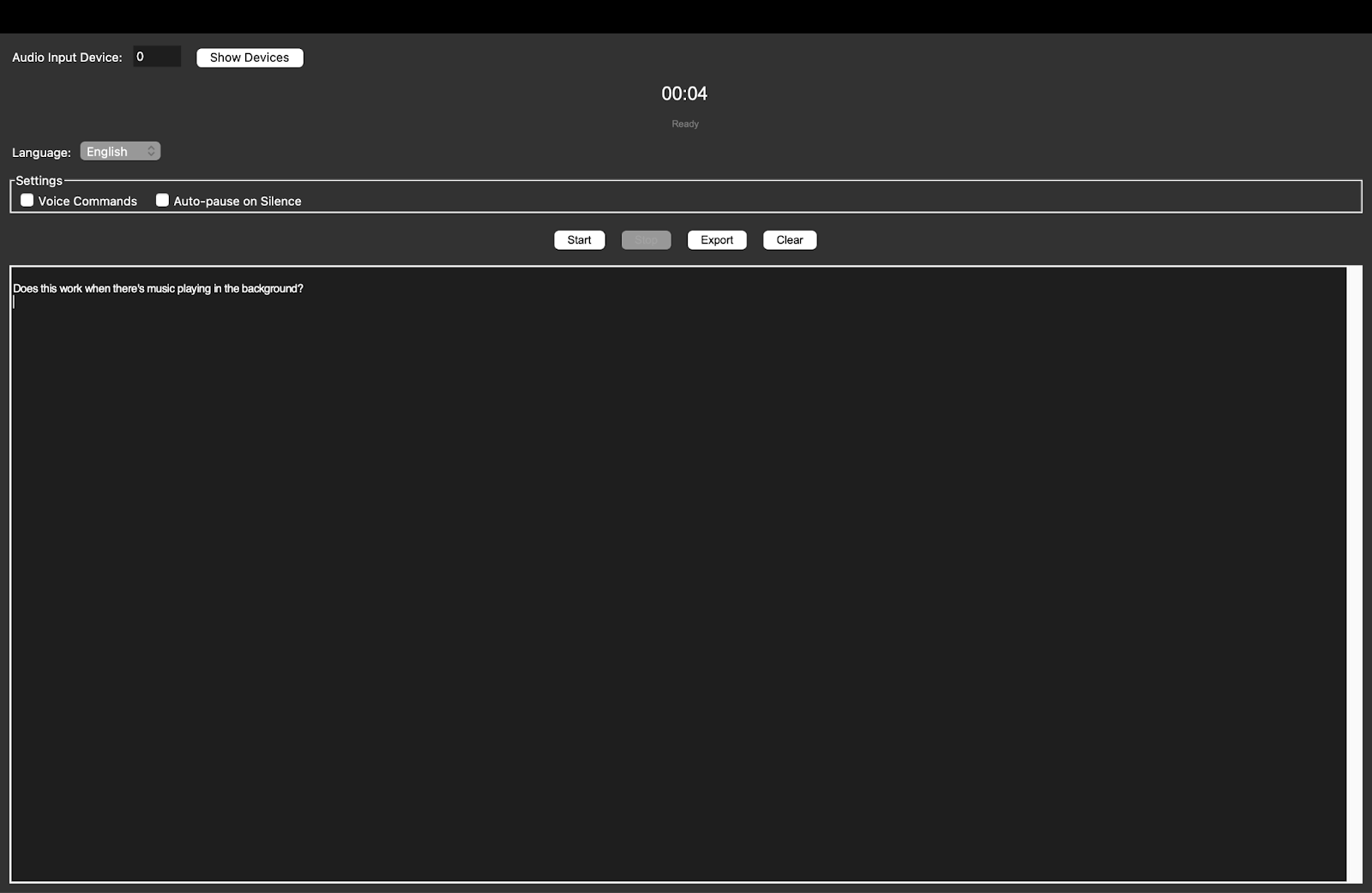
- You’re now free to Google facts you’ve used along the way. If the history of India’s colonisation is central to the document you’re building, now is the time to check if the Battle of Plassey was fought – as you remember – in 1756. It wasn’t; it was in 1757. If its belligerents were the British and the Nawab of Bengal, Sirajuddaullah. It was indeed the British East India Company – which many might consider semantically identical to Britain – on the one hand, and the Nawab of Bengal, Sirajuddaullah, and the French East India Company – which many might consider semantically identical to France – on the other. What are the political implications of equating the British East India company to Britain? In 1757, in particular? Was this before Britain assumed full control over the territories of the East India Company? Or was that Victoria, and did it happen closer to 1857? This needs ChatGPT. Ask it. It will say the following.
You will click on links and keep on reading. You will read, once again, about the Jallianwala Bagh massacre. You will seethe.
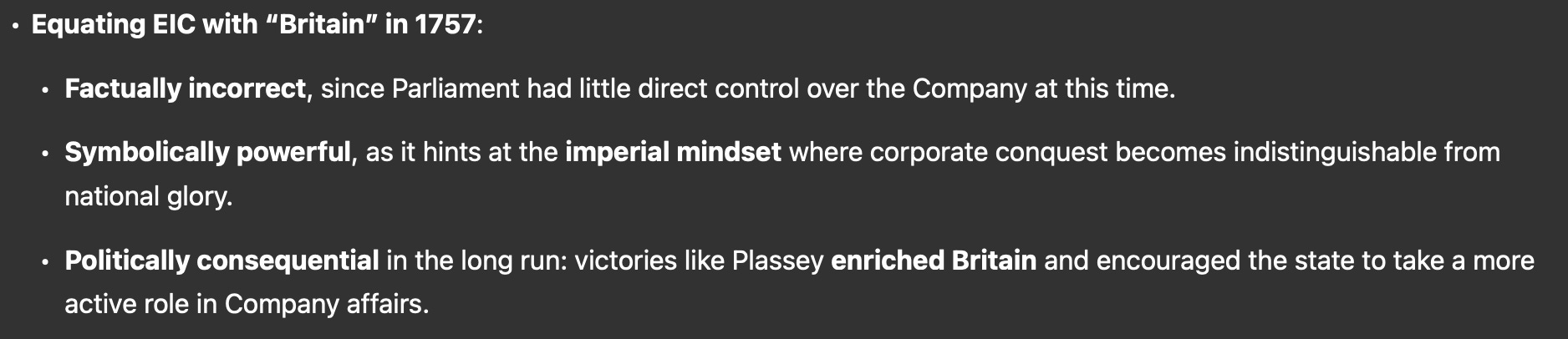
You will distract yourself by watching something silly on your phone. You will continue checking the facts of your piece. You will continue to distract yourself. Eventually you will be done checking the facts. You’ll look away from the screen: foggy, over-informed. You’ll have two things in front of you: the thing you wrote, and the thing the machine wrote.

Use the deep research output to cross-reference. Subtract meaningless subplots, and add meaningful ones to your piece. It is not meant to replace what you’ve written either in part or wholesale. It’s meant to serve as an alternate approach to writing about the same hypothesis. If you’ve done a good job, you should prefer your approach, but benefit from another point-of-view.
Close the draft. Let it breathe. You breathe. Go for a walk, meet a friend, go on a date, swim.
3 Likes∙1 Restack31
This site requires JavaScript to run correctly. Please [turn on JavaScript](https://enable-javascript.com/) or unblock scripts