I have a vision for the sort of mid-length essays I want to write. I think these essays could really add value to those who might want to read them – five dollars a month worth of value, in fact – if I spoke in an unfiltered way about growth (in the broadest sense of the word). Neither in the way stuffy books in the Business Resources section seem to reduce that complex question to a set of equations, nor in the way that podcasters and LinkedIn Top Voices and books in the *Self Development *section seem to reduce it to a set of banal platitudes. There is also value, I believe, in sharing ideas on a topic as interconnected as ‘growth’ real-time, as I'm experiencing and jostling with them: in the spirit of confessional poets and gonzo journalists. That's the spirit of the artist that's missing in those books and those online artifacts.
Remove the possibility that you may be wrong and you risk saying nothing useful.
- As I wait for two deals to close over the course of this week, which will determine how I scale Milk Toast, the best thing for me to do this week, I concluded, is write. Some for myself, some for others, but just write. I'm so tempted – the moment I know these letters might go through other pupils – to frame this in a way I would never frame it for myself. I'm so tempted to say not: the best thing for me to do this week is write. But instead to say: the most useful thing I could do is define and execute against a strategy for my online presence. After all, as an early-stage entrepreneur, as I give myself three days to see how the chips fall before expanding work and resourcing, shouldn't I be 'doing something useful'? Is writing for writing’s sake inherently useless? Is writing only useful if it’s done in service of one's online presence – or one's career as a writer.
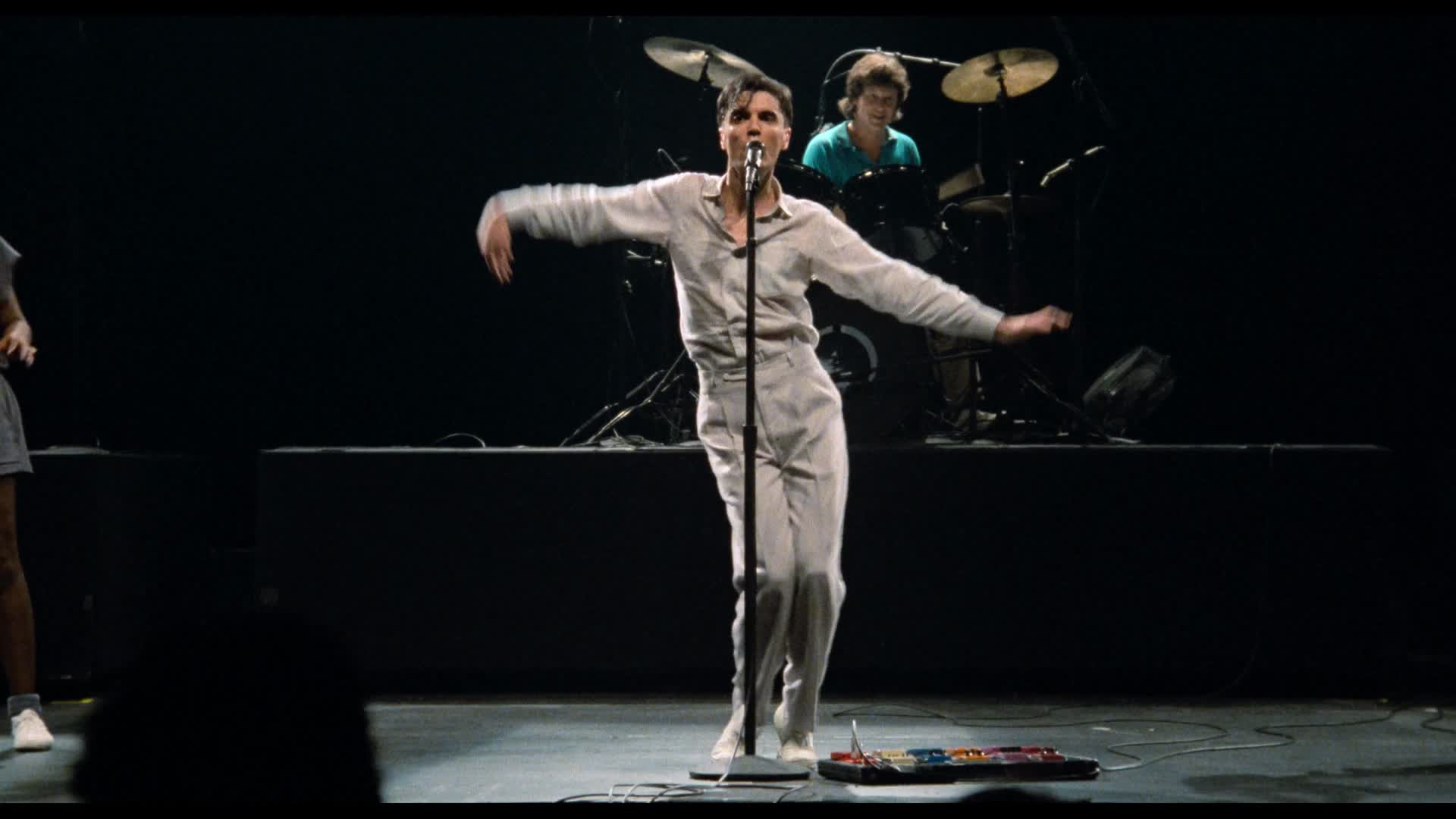
This is where what I find to be of value when I think about writing about growth starts to diverge from the fare that's on offer. At this inflection point, the WSJ-blurbed book from the successful West Coast type segues into an example of another successful West Coast type's approach followed by a framework. The LinkedIn Top Voice tells you that it's often useful to do nothing, to step back, to refocus. Rocket emoji.
But I already know that it's often useful to do nothing, to step back, to refocus. And while I can share a few approaches that have worked for me and others (peppered with examples of the unicorns they've gone on to helm) that have helped with pipeline management, resource planning, etc., I have a sinking suspicion. A lot of these frameworks are seen as useful not because they are inherently novel (most are evident when first-principles thinking is applied) but because of the names attached to the approach. The reader trades off useability for social proof. That's the benefit of documenting in real-time the experiments I'm undertaking to answer questions of growth about which I'm curious. The reader has skin in the game and is in for the journey. The journey, in turn, is where the reader learns something new. To return to the sausage analogy I seem to often employ: the only way to learn how to make a sausage is to see how it's made (by someone who has a firm view on how a good sausage is made, no doubt) rather than to have it presented by someone who goes on to describe the conditions of the kitchen in which it was made.

My online presence
I’m very unnerved by the idea of my online presence. While some of it is driven by insecurity (how self-absorbed to think of it, what if people think I’m a loser, what if nobody cares, oh god am I trying to be an influencer?) much of it comes from a good place. Earlier this year, I submitted my entry to the digital detox canon by documenting my experience deleting all non-essential apps off of my phone. It was a life-changing experience; I recommend a one-month digital detox to all who’ll listen. For me, the declutter was driven by a discomfort with my smartphone use. I had come to see it as contributing to a certain absence from the present that ran counter to all I’ve been told leads to a peaceful / successful / happy (take your pick) life. The truth is, I discovered, that all of us who are fortunate enough to have access to steady internet connections and smartphones have an online presence, whether we like it or not. That being deliberate about that online presence is about as important as being deliberate about one’s diet or exercise regimen. That if it is, say, important to you that your partner have a healthy diet and a regular exercise regimen, it should also be important to you that your partner have a healthy diet of digital media, both in terms of quantity and quality. So the idea of having an online presence make me a little uncomfortable; I’m sure you understand.
But I like to write. I like to make music. I like to be read. I like to be heard. And when anyone begins an entrepreneurial journey (especially if it’s a journey that’s explicitly aimed at helping businesses grow) one of the first questions they’re asked is: what’s the strategy for your online presence (read LinkedIn)? This is where my authentic answer starts to run counter to what I’ve come to absorb from my experience of how others do it. (I know, I know: stick to being authentic, authenticity is the best strategy, but stay with me.)
I have a hypothesis. A creative type’s online presence is net-positive to the creative type if the depth of the audience’s experience + the depth of the creative type’s expression is greater than the creative type’s expected depth of audience engagement.
These sub-hypotheses underlie it.
Posting ‘content’ (I prefer the word art, even if it’s an Instagram story about a beach day) for engagement on any social media platform has a negative impact on one’s psychological wellbeing.
For any creative type, be it a writer, a painter, or an entrepreneur, having the thing one’s created be ‘consumed’ (I prefer the word experienced, even if it’s a LinkedIn poll about whether change is more likely to be delivered by startups or large organisations) has a positive impact on one’s psychological wellbeing.
For any creative type, the act of creating itself – expression – has a positive impact on one’s psychological wellbeing.
(You’ll notice I don’t speak of a key pragmatic consideration – making money. I’ll speak about that in future essays about value.)
Say a developer builds an MVP that a thousand people find useful – so useful, they’d each pay a thousand bucks a month to use it. She posts about it on LinkedIn and gets 10 likes. Some other guy posts a platitude and gets a thousand reactions. Of course she feels deflated. Maybe she should’ve tried Product Hunt. Or better: spoken to her users directly. Expectations are lower. Feedback’s deeper. The art gets experienced.
I’d say the same thing for writing. I’d say the same thing despite knowing I like being read. Where’s the line?
Top voice
To answer the question, I enlisted the support of my friend – ChatGPT Deep Research. It wasn’t enough for me to just feel within my belly that the LinkedIn algorithm provided a perverse incentive to its participants to generate ‘content’ and ‘engage’ without meaning, despite its best efforts to change that algorithm to privilege high-quality writing. I needed research papers, studies, articles. It wasn’t enough to have a thought. I wanted to be a thought leader.
First, I generated a hypothesis to research. It is widely believed that environments like LinkedIn reward performative or meaningless engagement. However, over time, individuals who default to these patterns of behaviour, even under the impression that they are beneficial, are likely to be worse off than those who prioritize meaningful engagement, regardless of platform.
Then, I defined terms.
Engagement (plus meaningless, performative, meaningful)
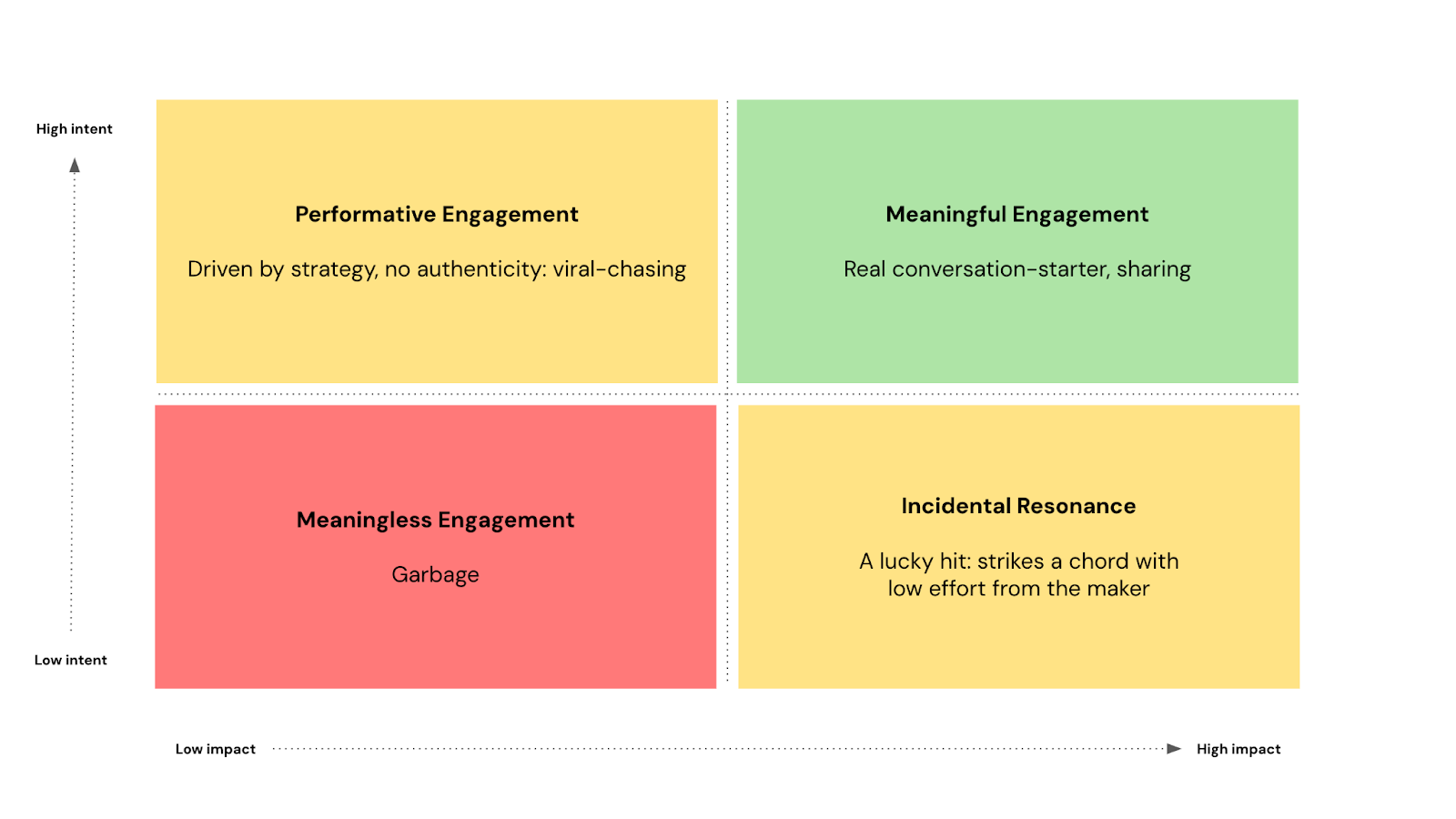
I defined engagement along the lines of the following 2x2 matrix. It categorises engagement by its intent (ranging from low-effort or autopilot actions to high-intent, purposeful actions) and its impact (ranging from negligible to significant).
Worse off
Then I put down a less robust definition for “worse off”.
Psychological well-being: mental health, esp. as it relates to mood conditions, depression, anxiety, and focus / attention.
Social connectedness: the quality, depth, and number of relationships, ranking on loneliness indices.
Professional fulfilment: growth in career, achievement of defined career objectives.
Creative fulfilment: intrinsic meaning in generating written or audiovisual art (I will exclude this axis, because I think it’s far too qualitative, and pads the results in favour of my hypothesis.)
And then, I found four pieces of literature that seemed to confirm my hypothesis (two of these are research papers that employed the scientific method – I outsourced falsifiability to the authors of those papers).
Jones et al. (2016). Associations Between Internet-Based Professional Social Networking and Emotional Distress. Cyberpsychology, Behavior, and Social Networking, 20(11). – Study finding that frequent LinkedIn use (≥1 per week) among young adults was associated with significantly higher odds of depression (AOR ~2.1) and anxiety (AOR ~2.8) compared to non-users, even after controlling for other factors.
Bailey et al. (2020). Authentic self-expression on social media is associated with greater subjective well-being. Nature Communications, 11(4889). – Research with over 10,000 participants showing those whose online persona more closely matched their true personality reported higher life satisfaction; a follow-up experiment demonstrated that posting in an authentic way causally improved mood and positive affect compared to posting in a self-idealized (performative) way.
Edelman & LinkedIn (2024). B2B Thought Leadership Impact Report. – Annual study of thousands of executives on thought leadership content. ~73% of B2B decision-makers agree thought leadership is a more trustworthy basis for assessing an organization’s capabilities than traditional marketing materials, underlining the importance of content quality over volume. The report explicitly warns of the “tangible risks” of publishing low-quality thought leadership — it’s not just ignored, it can harm a brand or reputation. Only 15% of decision-makers rated the majority of the thought leadership they see as very good or excellent.
There are a lot of articles claiming that LinkedIn updated its algorithm to focus more on quality than quantity. However, all of these posts are by linfluencers and are super light on referencing, so I won’t link them here. I also don’t think it matters what the algorithm says it is. The damage to our psyches has already been done.
For the love of writing
So where’s the line?
The growth of a creative product – be it a magazine, a record, or a small business – is driven by a multitude of factors. But creative products are made, ultimately, by a small group of people. The growth of these products is driven as much by the health of this small group of people as it is by a strong offering, a watertight delivery model, and a competitive price point. In a way, it’s the bedrock of all broad-based conversations on growth: be it self-growth, the economic growth of a country, the growth of a culture in a petri dish, the growth of an organisation: stable conditions for growth precede it. (If you can’t sleep at night, because you fear your country might be plunged into a war, for instance, it’s hard to focus your mind on the growth of your still-nascent business; it feels like a trivial pursuit.)
The answer is likely to sound very different for different people. But if you’ve made it this far, let me tell you what it sounds like for me.
Intent (why am I even writing this?): The easiest way to achieve clarity is to apply the 'audience of one' totem: imagine you're writing for yourself. What does this audience want to read? What does this writer want to write? It eliminates the perverse incentives that come with writing for an audience. I deployed it to great effect while writing Daedalus; it makes writing enjoyable, more relatable, and clarifies intent to only what matters most.
This approach transforms the writing process itself. When I write for myself first, I find myself exploring ideas I'd otherwise censor, following threads I'd otherwise cut short. There’s no pressure to sound authoritative, only curiosity. Questions become more interesting than answers.
Impact (how much and for whom?): Rather than imagining a whole cohort for whom my writing will be marginally useful, isn't it better to imagine a few people for whom it will be very useful? It's the writing equivalent of establishing product-market fit: identify your power users and drive insane value for them first. I've started thinking of ‘power readers’: my ideal reader is someone sitting across from me at a coffee shop, curious about growth.
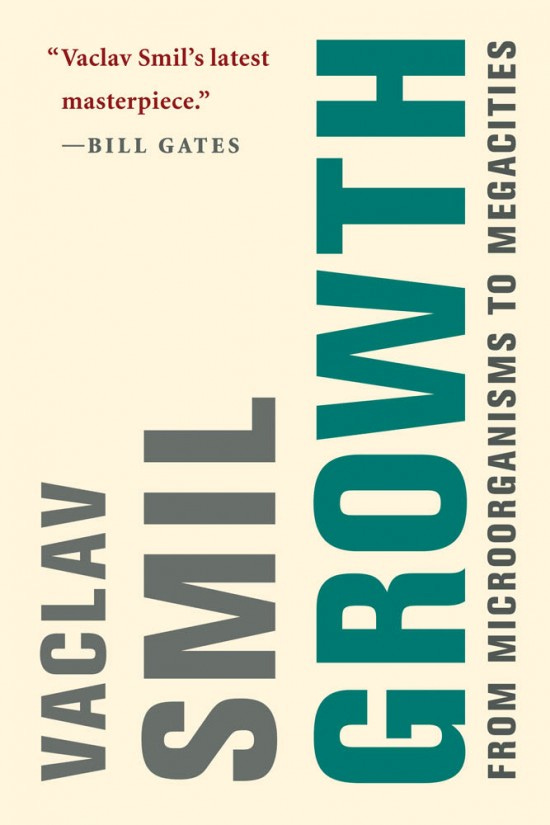
Growth (a more holistic definition): It isn't enough to eschew traditional markers – impressions, clicks, likes. I need to define growth more holistically. I want to read this book.
I like being read, yes, but isn't it better to be read deeply than widely? Also – isn’t the only way to being read widely to first be read deeply? I'm looking for my power readers – those who engage with ideas rather than consume content, who see writing as conversation. When I think about the writing I admire most, it's never the pieces optimized for engagement. It's the work that feels necessary to the writer, the explorations that couldn't help but be written. These pieces carry a different energy. Because ultimately, that's what good writing is – not a monologue performed for an audience, but one side of an ongoing dialogue about what it means to be human.
This site requires JavaScript to run correctly. Please [turn on JavaScript](https://enable-javascript.com/) or unblock scripts